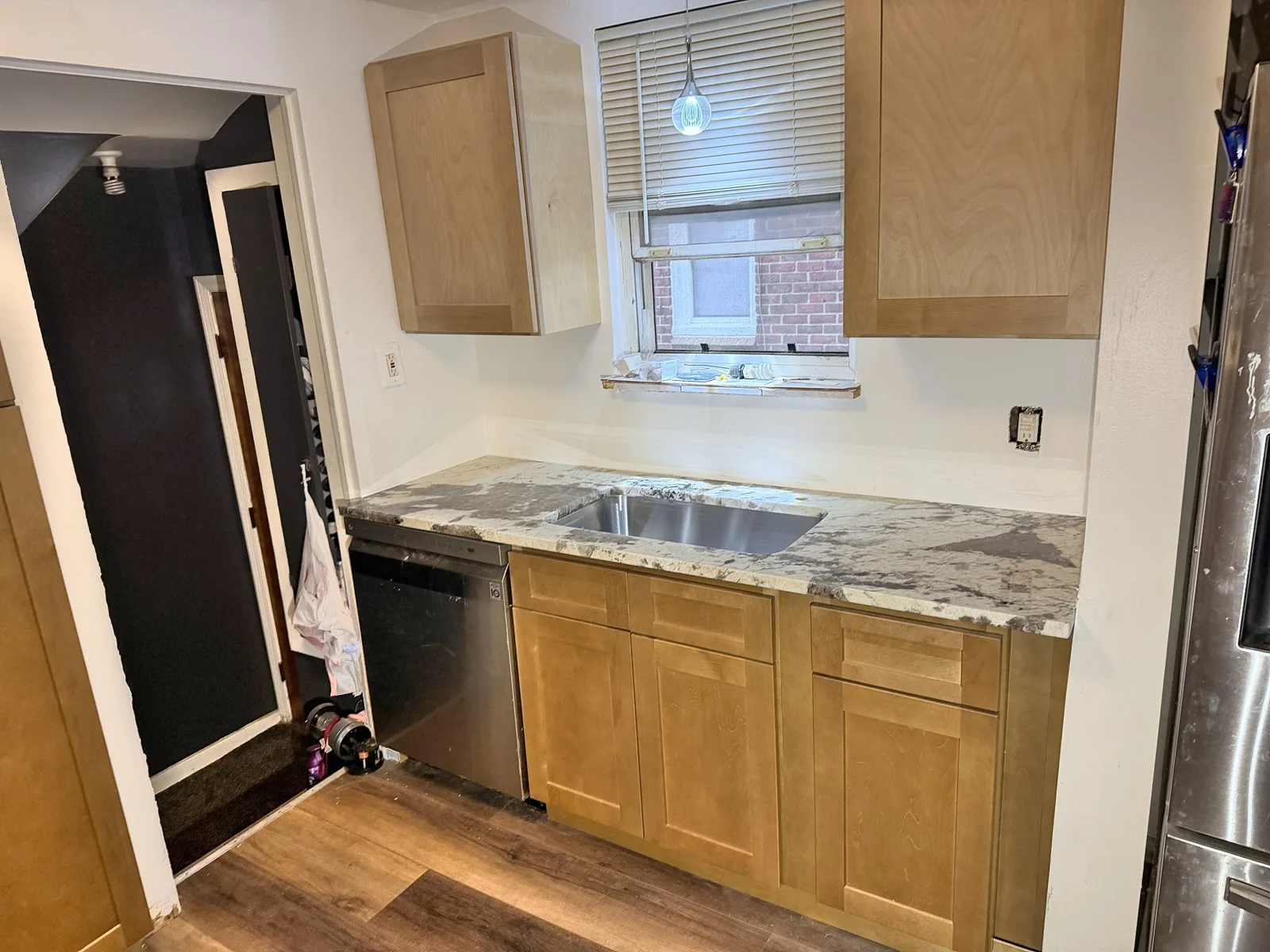
You've got the project in mind: the kitchen you've been staring at for years, a bathroom gut, a basement finish, or a full rehab on a house you're buying with plans to fix it up. The vision is clear. The question is how you pay for it. For most Detroit homeowners, this is where things stall, because renovation financing looks complicated until you actually know what you're looking at. Here's what works, and when.
Buying a Fixer-Upper: The FHA 203K Loan
If you're purchasing a home that needs real work, the FHA 203K loan is the strongest tool available, and one of the least understood. Instead of a separate purchase mortgage and renovation loan, the 203K wraps both into a single FHA-insured mortgage based on the home's after-renovation value, not its current as-is price. Buy a $120,000 Detroit bungalow, roll in $80,000 of renovation work, and you end up with a $200,000 home financed through one loan.
Standard vs. Streamline
Two versions exist. The 203K Standard covers major structural work, additions, and full gut renovations, requires a HUD consultant, and carries no dollar cap beyond FHA loan limits: most Detroit rehab projects fall here. The 203K Streamline (Limited) covers non-structural cosmetic work, flooring, paint, kitchen and bath updates, capped at $35,000, with simpler, faster paperwork.
Detroit's older housing stock, bungalows, colonials, and craftsman homes in Oak Park, Ferndale, Southfield, and Berkley, often sells below market value because it needs work banks won't finance conventionally. That's the gap the 203K fills.
What It Takes
To qualify, you'll generally need a credit score of 580 or higher (lender-dependent), a down payment of 3.5% of the total loan amount, and owner-occupancy: the 203K isn't for investment properties. Work has to start within 30 days of closing, wrap within 6 months, and be done by a licensed contractor, no unlicensed subs. One caution: most Metro Detroit contractors avoid 203K projects because the HUD draw schedule and inspector coordination is more paperwork than they want to handle. Line up a contractor who's done this before you apply, not after.
Already Own Your Home: Equity-Based Options
If you already have equity built up, you have more flexibility than a 203K allows.
HELOC
A home equity line of credit works like a credit card backed by your home: a credit line up to 80-90% of your home's value minus what you owe, drawn as needed, with interest paid only on what you borrow and repayment spread over 10 to 20 years. It suits phased projects (kitchen now, basement next year), owners with 5+ years of equity, and credit scores of 680 or better. Rates are variable, tied to prime: expect 8-10% for well-qualified borrowers as of Q1 2026. Shop around. Detroit-area credit unions like DCECU and Lake Michigan Credit Union often beat big-bank rates.
Home Equity Loan
A home equity loan (second mortgage) works similarly to a HELOC but with a fixed rate and a lump-sum payout. It suits a single project with a known, locked-in cost, a full kitchen remodel or basement finish, better than a phased one.
Cash-Out Refinance
A cash-out refinance replaces your whole mortgage with a larger one at current rates, and the difference funds the renovation. This made more sense when rates were lower. In 2026, if your existing rate is already below 5%, a cash-out refi will likely raise your payment, so run the numbers before going this route.
Personal Loan
For smaller projects, a personal loan skips home equity entirely: you qualify on credit and income, funding can arrive in days, and your home isn't at risk. The tradeoff is a higher rate (10-20%+) and a lower ceiling (typically $10,000-$50,000), which fits a bathroom refresh, flooring, or new windows better than a full renovation.
The Financing Decision Starts With the Contractor
Whichever route you take, the number you borrow should come from a real number, not a guess. Pursuing a 203K means your lender will require a detailed scope and cost breakdown from a licensed contractor as part of approval, so line up a contractor experienced with HUD draw schedules before you apply. Using a HELOC or home equity loan, a vague verbal quote can leave you drawing more than you need, or short mid-project when costs come in higher than expected.
Get a detailed written estimate first, then take it to your lender. You'll know exactly what to borrow, and won't be guessing at numbers mid-process. Arise Above Construction serves homeowners across Wayne, Oakland, and Macomb counties, and is one of Metro Detroit's few contractors who fully specializes in 203K renovation projects.