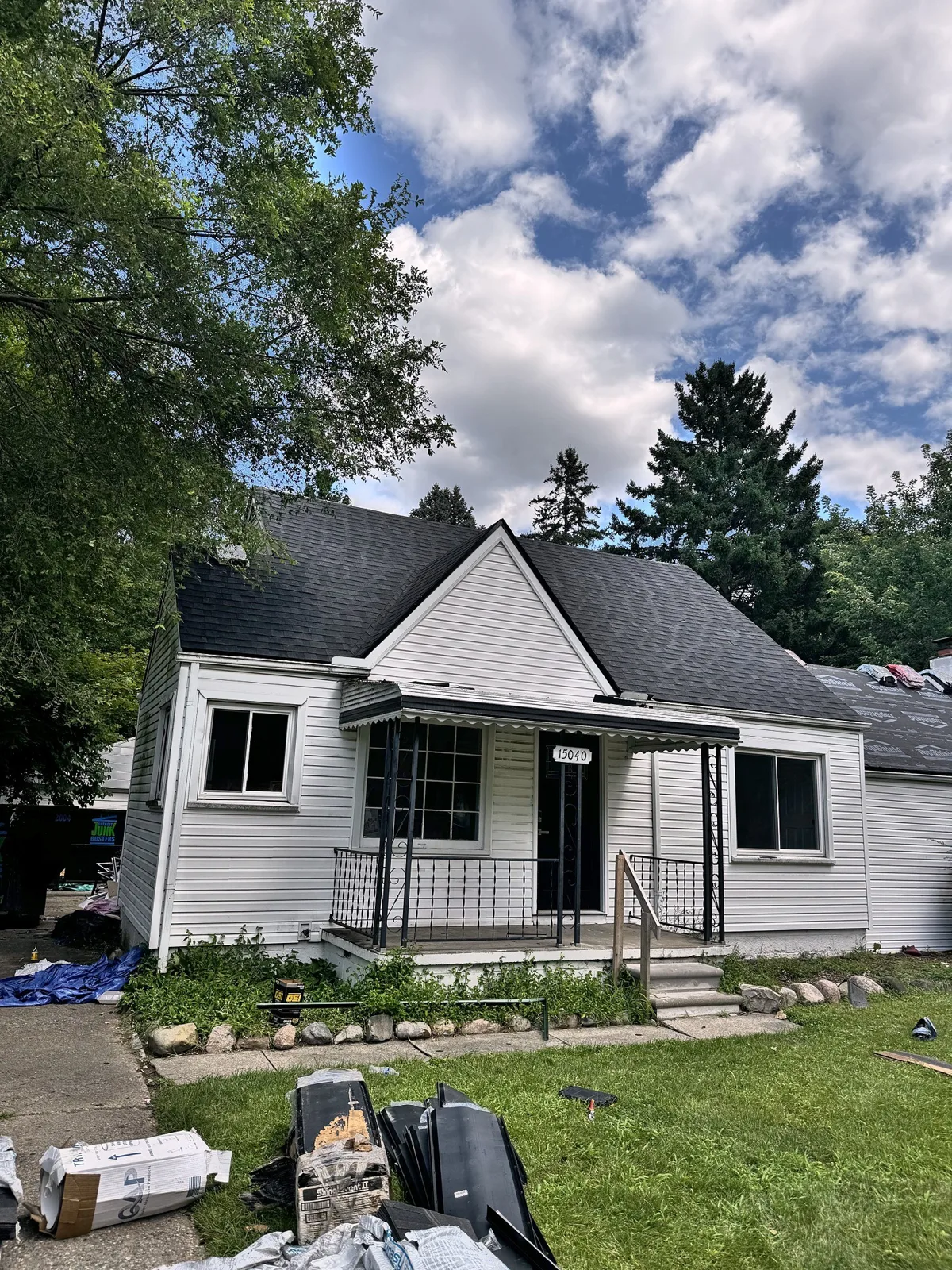
After 20 years building in Detroit, the same question comes up again and again: how do you buy a house that needs work without six figures in cash? For a lot of buyers, the answer is the FHA 203(k) loan, which finances the purchase and the renovation in one mortgage. One closing, one monthly payment, no separate construction loan stacked on top.
How a 203(k) Loan Actually Works
A 203(k) loan is a government-insured mortgage for buyers who want a house that needs work. The lender does not base your loan on what the house is worth today, broken roof and dated kitchen included. It is based on what the house will be worth once the renovation is finished. Say you find a house listed at $150,000 that needs $80,000 in repairs. You can borrow against the appraised, after-renovation value, not the beat-up version you are touring.
Because the FHA insures the loan, lenders can be more flexible with first-time buyers, modest savings, and less-than-perfect credit. Most 203(k) loans require only 3.5% down, compared to 10 to 20 percent for a conventional mortgage.
Who It Is Right For
This works well if you are a first-time buyer who has found a Detroit neighborhood you love, places like East English Village, Rosedale Park, Corktown, Mexicantown, or Midtown, but every move-in-ready house there is out of reach. It also works if you are willing to live through inspections, a lender timeline, and possibly staying elsewhere during the heaviest phase of work. It is not the right fit if you need to move in immediately with zero hassle, or you are not comfortable coordinating with a contractor.
How the Process Actually Runs
Get Pre-Approved, Then Go House Hunting
Before you look at a house, get pre-approved with an FHA 203(k) lender based on your income, credit, and debt-to-income ratio. That approval is typically good for 120 days. From there you go hunting in neighborhoods with solid housing stock: East English Village, Rosedale Park, Grandmont-Rosedale, Corktown, and Mexicantown are where we see most 203(k) buyers land, built up in the 1920s through 1940s with good bones and real appreciation potential.
Lock In an Estimate, Then Close and Renovate in Stages
Before you make an offer, you need a detailed, written renovation estimate, which your lender will require. We break down every line item, electrical, plumbing, roofing, HVAC, permits, labor, so your lender has a real number to work from, and that estimate sets your loan amount. At closing, renovation funds go into an escrow account rather than to you directly. We work in phases, and your lender inspects and releases funds after each milestone. The whole path from application to closing usually runs 45 to 90 days, and the renovation itself typically takes 8 to 16 weeks. Once the final inspection passes, your loan converts to a standard mortgage and you are done.
What This Looks Like in Real Detroit Numbers
The pattern holds across the projects we have priced: you are borrowing against the finished value, not the current condition. A $175,000 Tudor in East English Village with $65,000 of work can appraise around $285,000 once finished, for a total borrow near $275,000. A $145,000 Mexicantown starter with $60,000 of work can appraise near $260,000, for a loan around $251,000. These figures are illustrative, not quotes, but the shape of the deal holds across neighborhoods.
What We Handle, and the Bottom Line
We walk buyers through this process. We write estimates lenders trust because we deliver on them, manage every permit and inspection, and communicate directly with your lender so draws move without delay. When we quote a project at $75,000 and 12 weeks, that is what you get.
A 203(k) loan puts Detroit homeownership within reach for buyers without six figures in the bank. Get pre-approved, find a house with good bones in a neighborhood you believe in, and call us for a detailed estimate. We will walk the whole process with you, from that first estimate through the final inspection.